



Lace Trim: What to Make With It and How to Use It

It might have tiny bows or flowers, a perfect scalloped edge, an unexpected colour or that soft, slightly old-fashioned charm that makes you want to pick it up immediately. Whatever form it takes, lace trim is just so darn cute.
Whenever a donation of lace arrives at FABCYCLE, the same thing happens. We unroll it, pass it around and start imagining what it could become.
The excitement comes easily.
Finding the project can be a little harder.
That space between loving the lace and knowing what to do with it is exactly why so much beautiful trim ends up sitting unused. Many of the pieces that reach us were clearly chosen with enthusiasm, then carefully stored while the right idea never quite arrived.
This guide is here to help close that gap. We are looking at the different ways lace trim behaves, the kinds of projects it works well for and how to start using it without waiting for one perfect, imaginary garment.
Because if you say yes to the lace, we would really love to help you make something with it.
Lace has presence, and that is the fun of it
Some materials disappear into a garment. Lace rarely does.
Even a narrow strip can change the feeling of what you are making. It can make a simple camisole sweeter, give a cotton shirt a more delicate edge, add drama to a sleeve or make a practical alteration look completely intentional.
That presence can feel like a commitment. Once the lace is there, the garment has a point of view.
But the commitment can be as small or as big as you want it to be. Lace can be one delicate line at a neckline, a small detail on a pocket or the part of the garment that everyone notices first.
You can add a little, or you can fully lean into it.
Lace already has character. The real decision is where you want that character to show up.
This is also why lace sometimes gets saved for too long. It feels special, so we wait for a project that feels equally special.
Often, the easier answer is to use it on something familiar. A pattern you already know, a garment that needs one interesting detail or a piece that could use a little more length, texture or personality.


How we look at lace trim at FABCYCLE
You do not need to know every traditional lace name before you can sew with it.
Start by laying the trim flat. Look at the edges, width and stretch. Notice whether it naturally lies flat, gathers, curves or wants to become a wider panel.
Those details usually give you a much clearer starting point than the label, especially when there is no label left.
| What you notice | What it suggests | Places it could work |
|---|---|---|
| One firm edge and one decorative edge | This is usually an edging trim. One side gives you a clear place to stitch, while the other side is meant to remain visible. | Hems, cuffs, necklines, pockets, camisoles and sleeves |
| Two usable edges | This can often sit between two pieces of fabric or become an insertion within the garment. | Yokes, blouse fronts, sleeves, skirt tiers and vertical panels |
| Wide lace | It has enough visual weight to become part of the garment rather than a small finishing detail. | Hem extensions, shoulder panels, yokes and bodice sections |
| Stretch lace | It can move with a knit garment or fitted opening. Check both the amount of stretch and how well it returns to shape. | Camisoles, knit tops, lingerie details, necklines and soft hem finishes |
| Wide stretch lace with finished edges | It may be wide enough to become an entire garment section rather than only a trim. | Bralettes, bras, panties, camisoles, sleepwear and fitted panels |
| Gathered or dimensional lace | It already wants to create fullness, so it will often behave best when used like a ruffle. | Cuffs, collars, skirt tiers and statement sleeves |
| Motifs or very short pieces | They may not travel around an entire garment, but they can create one very deliberate detail. | Pockets, repairs, collar points, straps, appliqué and small inserts |
These categories are not rigid. A wide lace might extend a hem, sit over the surface of the garment or become the panel itself.
The goal is not to discover one officially correct use. It is to understand what the trim can do comfortably, then decide how much attention you want it to have.
A few ways lace can show up in a garment
The easiest way to move past the idea of lace as one very specific style is to look at how differently it can be used.
It can finish a neckline, travel down the side of a sporty pair of pants, replace part of a seam or become the main feature of an entire blouse.




The fabric around the lace changes its personality too.
Cream lace on linen may feel soft and traditional. The same lace on denim or a utility-style shirt can feel much sharper. Bright lace on a plain cotton dress can feel playful, while a narrow black trim can add a strong line without taking over the whole garment.
Lace and lingerie belong together
We could not talk about sewing with lace without talking about lingerie.
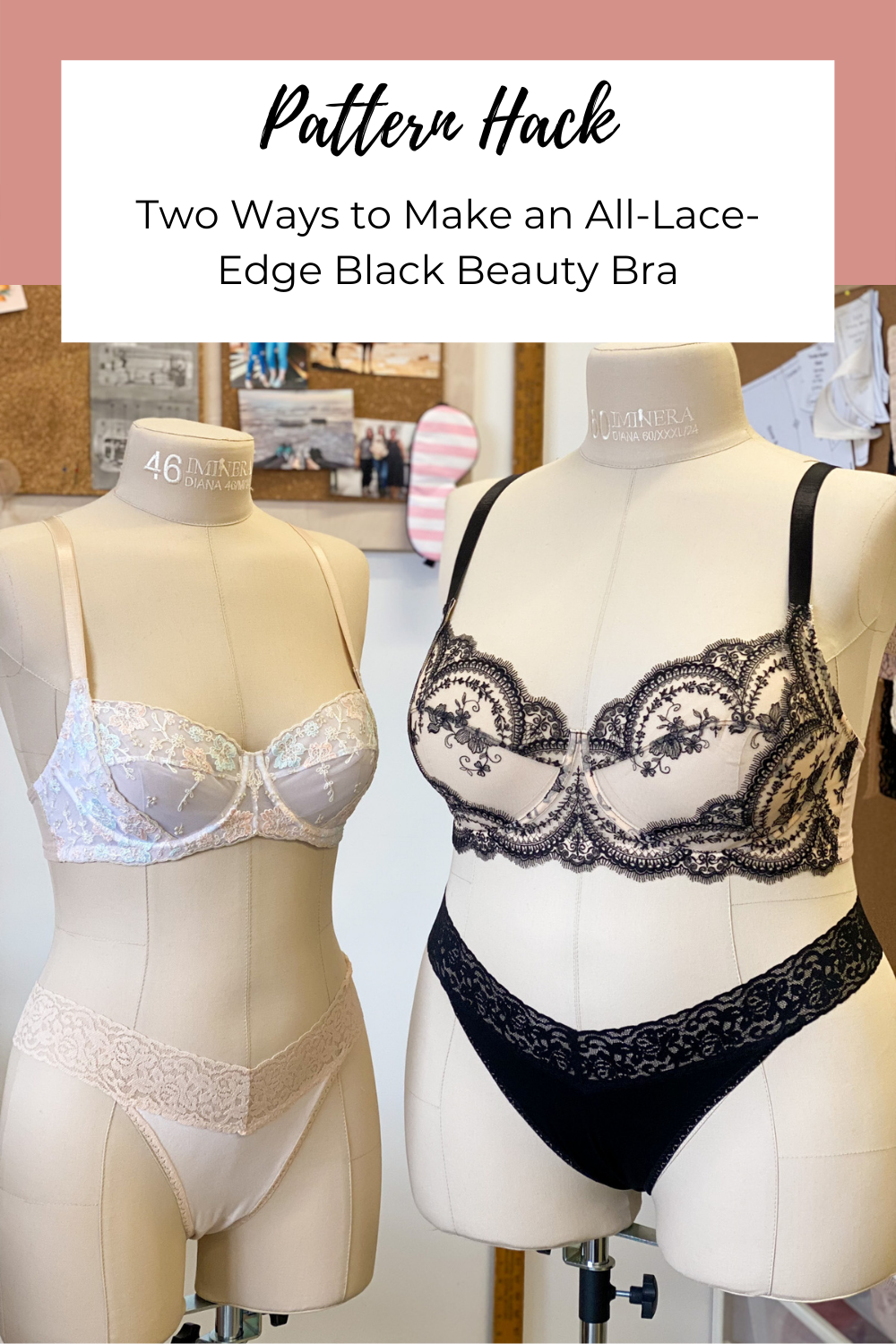
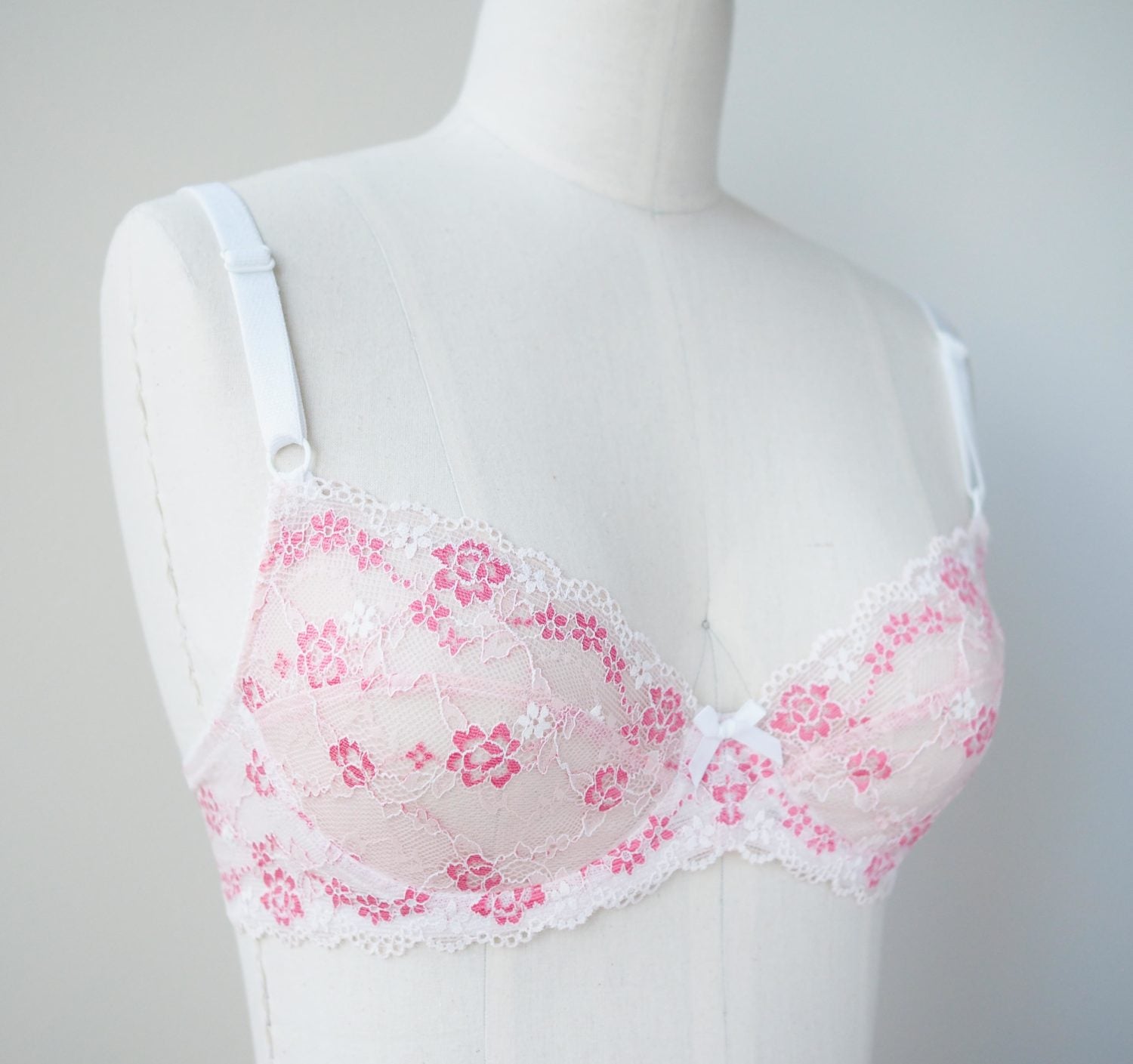
Lace can become the upper cup of a bra, the whole body of a bralette, a camisole neckline, a waistband or an entire pair of underwear. This is also one of the places where the behaviour of the lace matters most.
For close-fitting garments, check the direction of the stretch, how well the lace returns to shape and whether it feels comfortable against the skin. A beautiful lace that stretches but stays stretched may not give a waistband or bra band the support it needs. Stable or delicate lace can still be used, but it may need lining or a pattern specifically designed for it.

The four basic ways to add lace trim
Once you know where the lace belongs, the sewing usually falls into one of four categories.
Sew it on top
Lay the lace on the right side of the garment and stitch through one of its firmer edges or denser motifs.
This works well on pockets, plackets, trouser seams, yokes and any area where the lace is meant to sit visibly on the surface.
Let it extend past an edge
Place the trim beneath a hem, cuff or neckline so that its decorative edge remains visible.
Wide lace can also add length, so decide how much you want to show before cutting or hemming the garment fabric.
Catch it inside a seam
Baste the lace to one fabric section, add the second fabric layer and sew the seam.
This is useful between skirt tiers, at a cuff, between a yoke and bodice or anywhere you want the lace to emerge from a join.
Use it as an insertion
Lace with two stable edges can join fabric sections or create a narrow open panel inside a garment.
It takes a little more care, but it makes the lace feel built into the design rather than added after everything else is finished.
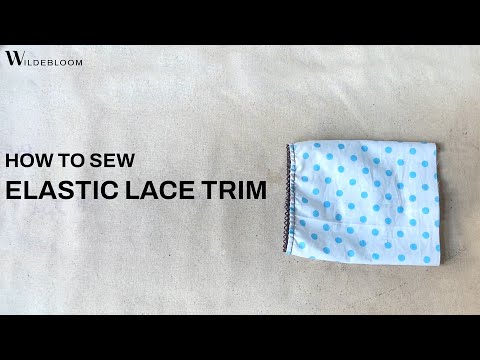
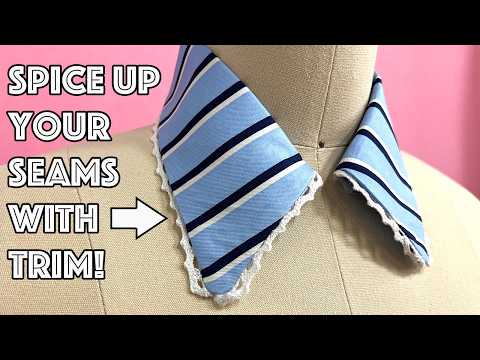
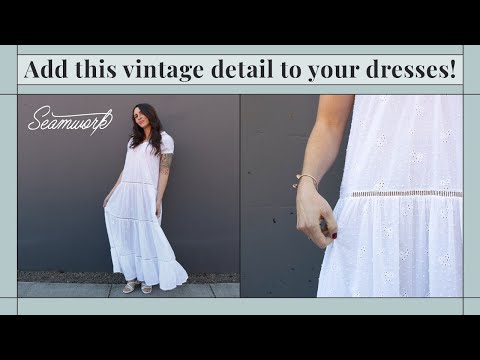
Three tutorials worth watching
Some techniques make much more sense once you see the fabric moving through the machine.
Clicking on any card to open the original company or educator’s YouTube video in a new tab.
Before you cut a one-of-a-kind lace trim
Deadstock and donated trims often come in fixed lengths. Once a piece is cut, there may not be another matching metre waiting in the back.
A few minutes of checking can save a lot of disappointment later.
- Measure the continuous length Several short pieces are not the same as one uninterrupted length.
- Look for joins Check for knots, repairs or places where separate lengths were connected.
- Check the condition Look for stains, fading, weak sections, broken threads and changes in width.
- Find the direction Flowers, scallops, bows and other motifs may clearly face one way.
- Test the stretch Gently stretch the lace, then see whether it returns to its original length.
- Consider the placement A rough trim may be fine on a pocket or outer layer but uncomfortable around the neck or underarm.
- Test the care Wash and press a small piece when possible, especially when the fibre content is unknown.
- Sew a sample Use the actual garment fabric. Lace can lie beautifully on one textile and pucker on another.
When the lace is not behaving
Most lace problems happen because the trim and garment fabric are moving, stretching or responding to pressure differently.
Open the questions below for a few places to start.
Why is the fabric puckering under the lace?
The lace and fabric may be feeding through the machine at different speeds. Baste them together first, try a slightly longer stitch and avoid pulling either layer while sewing.
Why does stretch lace look wavy?
It was probably stretched while passing under the presser foot. Support the weight of the garment and let the machine move the layers.
Why will the lace not sit smoothly around a curve?
The trim may be too wide or too rigid for that curve. Narrower and softer trims usually follow necklines and rounded openings more easily.
Should we use a straight stitch or a zigzag?
A straight stitch can work for stable lace on stable woven fabric. A narrow zigzag is often easier for irregular edges, stretch lace and areas that need some movement.
Test both stitches on a scrap before deciding.
Can stable lace trim be used on knit fabric?
Yes, but keep it away from areas that need to stretch over the body. A stable trim can work beautifully on a pocket, shoulder or body panel. It can cause problems around a fitted neckline, waistband or arm opening.
What should we look for when using lace for lingerie?
Check the direction of the stretch, how well the lace recovers and whether it feels comfortable against the skin.
Also check the pattern requirements. Some lingerie patterns are designed for wide stretch lace, while others need stable lace, lining, elastic or another supportive layer.
Can we tell whether old lace is handmade?
Sometimes the construction provides clues, but age, irregularity and appearance alone are not enough to confirm that lace was made by hand.
At FABCYCLE, we avoid describing a trim as handmade or assigning it to a specific period unless we have information that supports it.
The easiest place to begin
Keep the first project familiar.
Choose a trim with one clear edge for stitching and add it to a pocket, cuff, straight hem or camisole neckline. Use a pattern you already understand, baste the lace into place and test the stitch before sewing the actual garment.
Once you have used lace trim once, it becomes much easier to see it as part of your regular sewing rather than a beautiful supply waiting for a perfect future project.
It becomes one more material you know how to use, and hopefully one less piece that spends another ten years tucked inside a drawer.
Shop Deadstock Lace Trims
The collection includes vintage packages, stretch lace, colourful trims, short bundles and one-of-a-kind pieces. Some are quiet and delicate. Some absolutely are not.
Explore the Lace Trim Collection


Leave a comment